Beyond ‘No’: 5 Positive Discipline Strategies Used at ECSG
If you’ve ever found yourself engaged in a high-stakes power struggle over a toothbrush or a pair of shoes, you are not alone. Transitioning from one activity to another can be an emotional rollercoaster for young children, but at the Early Childhood School of Georgetown, we view these moments as some of the most important “teaching times” of the day.
In our classrooms, the word “discipline” doesn’t mean punishment. Our goal is to help children develop internal self-regulation rather than just following rules out of fear. Here are five positive strategies our educators use every day that you can easily try at home.

1. The Power of Two Choices
When a child feels they have no control, they often resort to a “No!” to reclaim it. We bypass the power struggle by offering two acceptable choices. Instead of saying “Put on your coat,” we might ask, “Do you want to put your left arm in first, or your right arm?” Both choices lead to the same result, but the child feels empowered by the decision.
2. Validating Feelings Before Redirecting
Children need to know they are heard before they can listen. If a child is upset that outdoor play is over, we don’t start with “Stop crying.” Instead, we say, “I see you are really sad that we have to go inside. You love the swings!” By naming the emotion, we help the child understand what they are feeling, which naturally lowers the temperature of the tantrum.

3. The “Positive Pivot” (What TO Do)
The human brain—especially a toddler’s brain—is much better at processing “do” than “don’t.” If we say “Don’t run!”, the child’s brain focuses on the word run. At ECSG, we use the “Positive Pivot” to tell them exactly what the expectation is: “Let’s use our walking feet inside” or “Please keep the sand in the bin.”
4. Consistent, Predictable Routines
Anxiety is a major trigger for “misbehavior.” When children don’t know what is coming next, they feel out of control. Much like the structures we discussed in our post about The Benefits of Play, our classroom schedules are visual and consistent. When a child knows that snack always follows circle time, they are much more likely to transition peacefully.
5. Setting Clear, Kind Boundaries
Positive discipline isn’t about being “permissive.” Children actually feel safer when they know exactly where the boundaries are. We set firm limits with a calm voice. If a child hits a friend, the boundary is clear: “I cannot let you hit. Hitting hurts. You can use your words to say ‘I’m mad,’ or you can squeeze this squishy toy.”
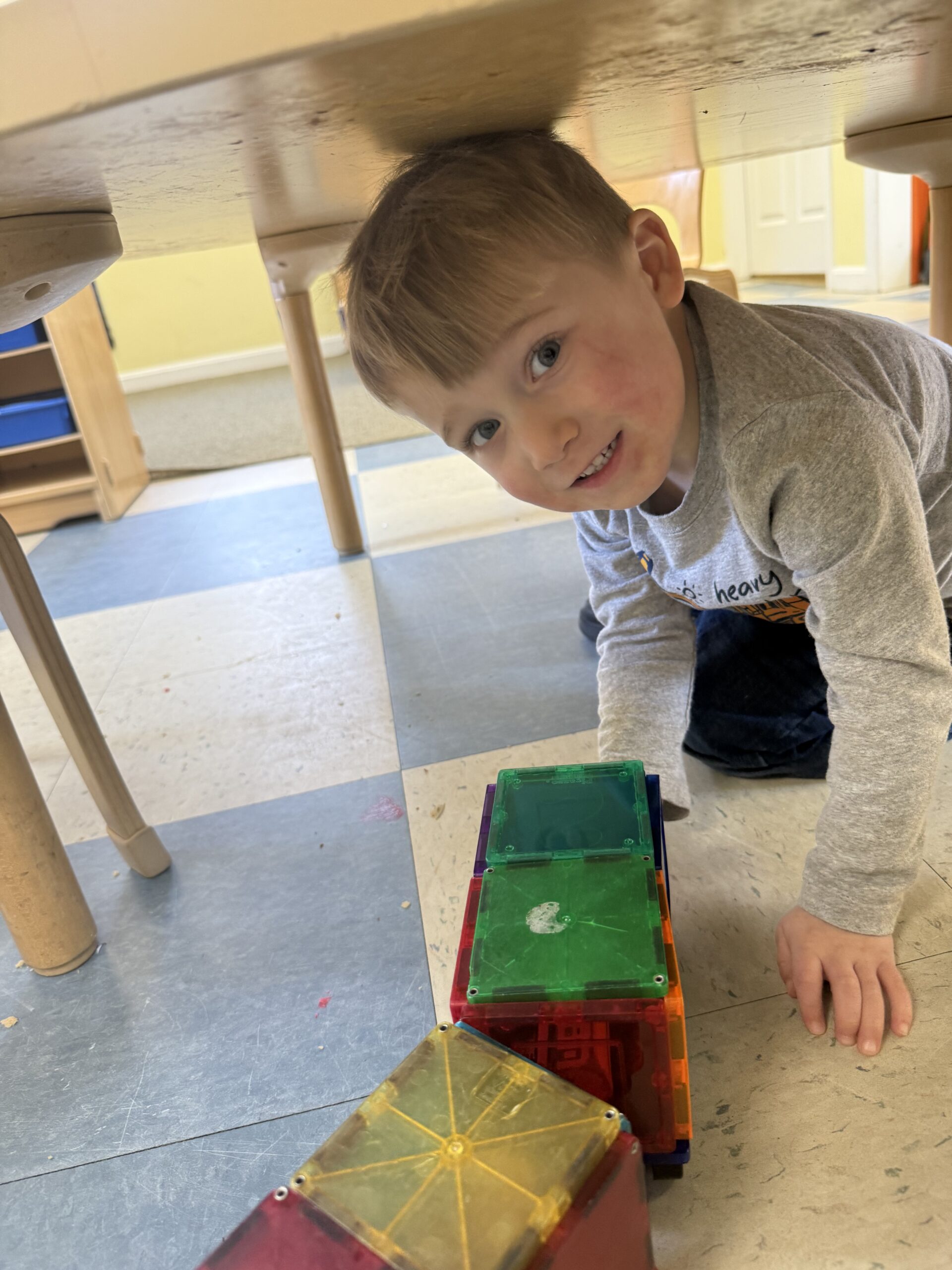
The ECSG Difference
By using these tools, we aren’t just managing behavior—we are building a relationship based on trust and respect. When children feel safe and understood, they are much more capable of the deep, meaningful learning that happens every day in our classrooms.
What is your “go-to” strategy for handling a tough toddler moment? Join the conversation on our Facebook page and let us know!